Finding the right tool to manage gum health can feel overwhelming with so many options available. When dealing with gingivitis, the best electric toothbrushes are those that balance effective plaque removal with gentle care for sensitive tissue. This article helps you compare top models to find one that fits your routine and improves your oral hygiene.
Our Picks
Top 10 Electric Toothbrushes For Gingivitis Of 2026
1. Oral-B Rechargeable Electric Toothbrush

Best for: Users who want detailed real-time brushing feedback.
Among the best electric toothbrushes for gingivitis, this model uses advanced technology to remove more plaque than manual brushing. Its iO pressure sensor signals if you are applying too much or too little pressure, which is vital for protecting inflamed gums. It also tracks your brushing in real-time via an app, ensuring you never miss a spot.
The 5 cleaning settings offer versatility for different oral care needs. However, if you prefer a device that functions simply without needing to connect to a smartphone app, this model might feel more complex than necessary.
Pros
- Visual pressure sensor protects gums.
- Tracks brushing progress via app.
- Includes a convenient travel case.
Cons
- Requires app for full tracking.
2. Burst Original Sonic Electric Toothbrush

Best for: Users looking for clinically tested gum support.
This sonic brush uses 33,000 vibrations per minute to break up plaque while remaining gentle on tissue. It’s specifically noted for helping reduce gum bleeding when compared to manual brushing. The ultra-soft, multi-length bristles are designed to clean between teeth without causing irritation.
The one-month battery life is excellent for those who travel frequently and want to avoid carrying extra chargers. This device isn’t ideal for those who prefer the scrubbing motion of a rotating head, as it relies on sonic vibrations instead.
Pros
- Clinically tested to reduce bleeding.
- Long-lasting one-month battery life.
- Soft bristles prevent gum harm.
Cons
- No pressure sensor mentioned.
3. Philips Sonicare 5900 Rechargeable Electric Toothbrush

Best for: Those needing a balance of power and gentle care.
This toothbrush uses Next-Gen Sonicare Technology to drive fluid deep between teeth for a professional-clean feel. The pressure sensor protection is a key safety feature, providing a haptic vibration if you press too hard. It includes a specific Gum Health mode for when your mouth feels tender.
The 21-day battery life makes it a solid choice for work or vacation travel. This might not be the right fit for someone who finds haptic vibration alerts distracting rather than helpful during their daily routine.
Pros
- Automatic power adjustment for safety.
- Dedicated Gum Health brushing mode.
- Includes two specialized brush heads.
Cons
- Power adapter not included.
4. Oral-B Pro 1000 Rechargeable Electric Toothbrush

Best for: Users who prioritize simple, reliable pressure control.
The Pro 1000 utilizes a dentist-inspired round brush head that reaches areas manual brushes often miss. Its gum pressure control is highly effective, as it automatically stops pulsations if you press too hard against your gums. This feature is perfect for preventing accidental damage while you learn to use an electric brush.
The 3 cleaning modes provide enough variety for basic needs without overwhelming the user. If you’re looking for smart features like app connectivity or advanced tracking, this model will feel quite basic.
Pros
- Automatic stop for excessive pressure.
- Simple, easy-to-use cleaning modes.
- Includes 30-day money-back guarantee.
Cons
- No advanced smart app connectivity.
5. Aquasonic Vibe Series Pro

Best for: Users wanting a complete hygiene-focused kit.
This model stands out because it includes a UV sanitizing base to help keep your brush heads clean between uses. It features a powerful 50,000 vibrations per minute motor and has earned the ADA seal for its efficacy in reducing gingivitis. The kit is comprehensive, providing 6 ProFlex brush heads that last for 1.5 years.
The multiple modes, including “Massage” and “Deep Clean,” offer a high level of customization. This could be a drawback for someone who prefers a streamlined, single-button operation for their morning routine.
Pros
- UV base sanitizes brush heads.
- ADA accepted for gingivitis reduction.
- Includes many replacement brush heads.
Cons
- Larger footprint due to base.
6. Philips Sonicare 4100 Rechargeable Electric Toothbrush

Best for: Those transitioning from a manual brush.
The EasyStart feature is excellent here, as it increases power over the first 14 uses to help you adjust to the sonic sensation. It includes a built-in pressure sensor that pulses if you press too hard, protecting your gums during the transition. The C2 Optimal Plaque brush head is designed to be gentle while still removing plaque effectively.
It holds a charge for up to 14 days, which is helpful for shorter trips. This model isn’t designed for users who want a wide variety of intensity levels, as it focuses on a consistent, gentle experience.
Pros
- EasyStart helps with manual transition.
- Pressure sensor protects sensitive gums.
- Reliable 14-day battery life.
Cons
- No multiple intensity settings.
7. Oral-B Rechargeable Electric Toothbrush

Best for: Beginners wanting an easy-to-use electric experience.
The iO2 is designed for simplicity, featuring a one-touch button and a quiet motor. It starts automatically on the super-sensitive setting, which is ideal for those with existing gum irritation. The automatic gum pressure sensor signals red if you brush too hard, ensuring you maintain a safe technique.
Its long-lasting battery and compact design make it a great entry-level device. If you’re looking for a device with many different cleaning modes or advanced app integration, this model may be too simple.
Pros
- Very easy to start using.
- Quiet operation during use.
- Super-sensitive mode for sensitive gums.
Cons
- Limited to three cleaning modes.
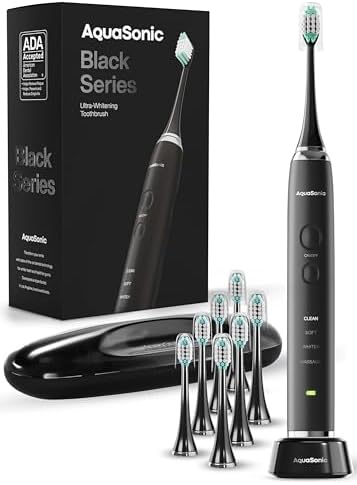
8. Aquasonic Black Series Ultra Whitening Toothbrush
Best for: Those who want a high-value bundle.
This set is impressive because it includes 8 DuPont brush heads, providing enough supply for roughly 2.5 years of use. It features a powerful 40,000 VPM motor and has been accepted by the ADA for its ability to reduce gingivitis. The wireless charging and sleek design make it a modern addition to any bathroom.
With 4 distinct modes, it offers plenty of variety for different needs. If you prefer a lighter handle, you should note that this model is packed with features that might make the handle feel substantial in the hand.
Pros
- Excellent value with included heads.
- ADA accepted for gum health.
- Fast wireless charging base.
Cons
- Requires space for charging base.
9. Aquasonic Icon Micro-Vibrating Sonic Toothbrush

Best for: Fans of the manual brushing technique.
The Icon is unique because it’s designed to be used exactly like a manual toothbrush. It uses micro-vibrations to boost your cleaning without requiring you to learn a new brushing style. It’s ADA-approved and includes a magnetic holder for sleek storage.
This is a great option for those who find standard electric brushes too intense or complicated. However, it lacks the variety of settings found in more advanced sonic or rotating models.
Pros
- Uses familiar manual brushing technique.
- ADA accepted for efficacy.
- Includes magnetic storage holder.
Cons
- Very few cleaning modes.
10. Bitvae ADA Accepted Electric Toothbrush

Best for: Frequent travelers who want long battery life.
This model is a standout for travel, boasting an incredible 60-day battery life. It’s ADA-accepted and includes a 2-in-1 holder and cover, which keeps the brush head hygienic while you’re on the go. The 5 brushing modes ensure you can customize your experience to your specific gum care needs.
The kit provides 8 replacement heads. If you don’t travel often, the focus on compact, lightweight design might be less important to you than other features.
Pros
- Extremely long battery life.
- Hygienic cover included for travel.
- ADA accepted for gum health.
Cons
- Power adapter not included.
Best Electric Toothbrushes For Gingivitis: How to Choose
Understanding Pressure Control
When you have gingivitis, your gums are often tender and prone to bleeding. A pressure sensor is the most important feature to look for. Some models simply pulse or change vibration patterns when you press too hard, while others stop the motor entirely. This feature prevents you from scrubbing away at inflamed tissue, which can worsen the condition. Always prioritize a brush that offers some form of feedback, as it helps you develop a lighter, safer touch.
Sonic vs. Rotating Technology
Electric toothbrushes generally fall into two categories: sonic or rotating. Sonic brushes vibrate at high speeds to move fluid between teeth, which is often described as a gentle, sweeping sensation. Rotating brushes use a round head that oscillates and pulsates to break up plaque. Both are effective, but if you have very sensitive gums, you might find the sweeping motion of a sonic brush more comfortable. Consider your personal preference for how the brush feels against your teeth.
Battery Life and Portability
If you travel frequently, look for a model with a long-lasting battery. Some brushes offer enough power for a short getaway, while others can last through an entire season on a single charge. Additionally, check if the model includes a travel case. A high-quality case protects the brush head from dust and damage, which is essential for maintaining hygiene when you’re away from home. Being able to pack light without worrying about a bulky charger is a significant advantage.
Brushing Modes and Intensity
Most electric toothbrushes for gingivitis include specialized modes like “Sensitive,” “Soft,” or “Gum Care.” These modes reduce the intensity of the vibrations or rotations to be more forgiving on your gums. Having these settings allows you to start on a gentle setting while your gums heal and move to a more thorough cleaning mode later. Avoid models that only have a single, high-intensity mode, as these can be too harsh for someone currently struggling with gum disease.
Long-Term Value
Look for brands that offer consistent availability for their replacement heads to ensure you can maintain your routine without interruption. Since dental professionals recommend replacing your brush head every three months, check if your chosen model includes multiple heads in the box. Consistent access to compatible heads ensures you can maintain your routine without interruption.
Mistakes to Avoid When Buying for Gingivitis
Ignoring the Pressure Sensor
Many users get an electric toothbrush and continue to scrub as if they were using a manual brush. This is a major mistake, especially when you have gingivitis. The brush is designed to do the work for you. If your brush features a pressure sensor, pay attention to the lights or vibrations. Ignoring these alerts and pressing too hard can irritate your gums and cause them to recede. Let the brush head glide across your teeth rather than pushing it into them.
Choosing the Wrong Bristle Firmness
When your gums are inflamed, you might think you need a firm brush to “clean” the area better. This is incorrect. Always choose soft or ultra-soft bristles. Firm bristles can cause physical trauma to inflamed gum tissue, leading to more bleeding and discomfort. Many of the models listed come with soft bristles specifically for this reason. Using a brush that’s too hard is a common way to turn minor gingivitis into a more serious issue.
Forgetting to Replace the Brush Head
It’s easy to keep using a brush head until the bristles look frayed, but this is a mistake. Worn-out bristles are less effective at removing plaque and can become harsh on your gums. Most modern electric toothbrushes have a replacement reminder feature that tracks your usage. If your model doesn’t have this, mark your calendar to change the head on a regular seasonal schedule. Fresh bristles are essential for effective cleaning and maintaining the safety of your gums.
Neglecting the Gumline
People often focus entirely on the surface of their teeth and forget that gingivitis starts at the gumline. A common mistake is holding the brush at the wrong angle. You should aim the bristles at an angle toward the gumline to ensure you’re clearing away plaque from the area where the tooth meets the gum. If you brush only the flat surfaces of your teeth, you’re missing the most important area for managing gum health.
Relying Only on the Brush
An electric toothbrush is a powerful tool, but it isn’t a replacement for other hygiene habits. Relying solely on the brush while ignoring flossing is a mistake. Plaque builds up in the tight spaces between your teeth where the brush bristles can’t reach. Even the most advanced electric toothbrush needs to be paired with flossing or an interdental cleaner to effectively manage gingivitis. Use the brush as part of a complete routine, not as your only line of defense.
FAQ
Can an electric toothbrush really help with gingivitis?
Yes, electric toothbrushes are often more effective than manual brushes at removing plaque along the gumline. Many models are specifically designed to be gentle on inflamed tissue while providing a thorough clean.
How often should I replace the brush head?
You should replace your brush head at regular intervals throughout the year, or sooner if the bristles appear frayed. Using a worn-out brush head is less effective and can be harder on your gums.
Do I need a brush with an app?
An app can be helpful for tracking your habits and ensuring you cover all areas, but it isn’t strictly necessary. If you prefer a simpler routine, models with basic timers and pressure sensors are just as effective.
Are sonic or rotating brushes better for gums?
Both can be excellent for gum health. Sonic brushes are often preferred by those with high sensitivity due to their gentle vibration, while rotating brushes are highly effective at mechanical plaque removal.
What is the best way to clean my brush head?
Rinse the brush head thoroughly after every use and store it upright to air dry. Some kits include UV sanitizers, which can provide an extra layer of hygiene between uses.
Conclusion
The best electric toothbrush for you is one that incorporates a pressure sensor to protect your gums while fitting comfortably into your daily routine. By choosing a model with soft bristles and consistent brushing feedback, you can effectively manage plaque and support healthier gums.
Final Thoughts
Investing in your gum health makes a real difference, and you’ll likely notice healthier results after just a few weeks of consistent use. Don’t wait until your next checkup to start; pick a model that feels comfortable today. Your smile will thank you for making this simple switch to better daily care.
Related guides