


Choosing the right supplement when managing renal health is a complex task. There are many options, and finding the Best Probiotics For Kidney Disease requires looking closely at ingredients and specific strains. This guide helps you navigate the differences between human and pet-specific formulas. You’ll find clear information to help you decide which product matches your needs.
The Winners
Top 7 Probiotics For Kidney Disease
1. Kibow Renadyl Probiotic

Best for: Humans seeking clinically validated kidney support.
This supplement is the first developed specifically to support healthy kidneys. It features three proprietary strains chosen for their affinity for consuming uremic toxins in the gut. With 45 billion CFUs, it provides a concentrated approach to maintaining healthy levels of creatinine, urea, and uric acid.
Because this formula requires refrigeration for peak efficacy, it’s best suited for those who can maintain a consistent storage routine at home. It’s non-GMO, sugar-free, and gluten-free, making it a versatile choice for many diets. The listing doesn’t mention travel suitability.
Pros
- Developed specifically for kidney health.
- High concentration of 45 billion CFUs.
- Recommended by nephrologists for safety.
Cons
- Requires consistent refrigeration for potency.
2. NEPHROMAX™ Synbiotic Capsules Dogs Cats -36 Billion CFU- Kidney Support

Best for: Pet owners needing a shelf-stable renal detox.
This formula uses an advanced, next-generation approach to enteric detoxification for cats and dogs. It combines four probiotic strains and two prebiotic strains to help metabolize nitrogenous waste and reduce stress on the kidneys. With 36 billion CFUs, it offers a strong, steady support system for pets of all ages.
The capsules are designed to be shelf-stable, meaning you don’t need to worry about refrigeration. This makes it very convenient for pet owners who want to keep supplies on hand without taking up fridge space.
Pros
- Shelf-stable with no refrigeration required.
- Includes prebiotics for gut biome growth.
- Small, easy-to-swallow capsules for pets.
Cons
- Strictly formulated for cats and dogs.
3. Pet Health Pharma Azovast

Best for: Pets needing daily renal toxin management.
This supplement provides targeted renal support through a formula containing four beneficial probiotics. Each capsule delivers 24 billion CFUs to help maintain normal BUN and creatinine levels. The capsules are acid-resistant, which helps ensure the probiotics reach the intended area of the digestive tract.
You can pull the capsules apart to mix the powder with food, which is helpful if your pet has trouble swallowing pills. It’s manufactured in a cGMP facility in the USA, ensuring consistent quality.
Pros
- No refrigeration required for storage.
- Versatile delivery (capsule or mixed in food).
- Acid-resistant capsules for better absorption.
Cons
- Lower CFU count than some competitors.
4. Kidney Cleanse Detox & Repair
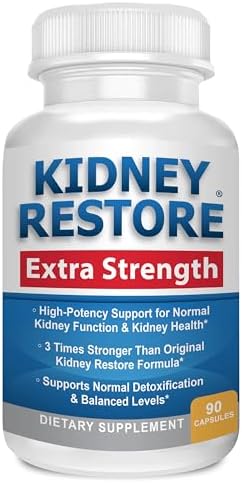
Best for: Individuals wanting a comprehensive detox and repair.
This is a high-potency supplement featuring 90 billion kidney-specific probiotics. It works by eating up toxins and supporting normal BUN, creatinine, and GFR levels. The formula also includes sodium bicarbonate to neutralize kidney acid and CoQ10 to support kidney cell energy.
The use of delayed-release capsules ensures that the ingredients aren’t neutralized by stomach acid. However, because it contains a complex blend of vitamins and minerals, it may not be suitable for those already taking specific renal medications without consulting a doctor first.
Pros
- Very high concentration of 90 billion CFUs.
- Includes sodium bicarbonate for acid neutralization.
- Contains CoQ10 for renal cell energy.
Cons
- Complex formula requires medical oversight.
5. RENAMAX Capsule Kidney Restores & Kidney Care Supplement

Best for: Those who prefer a synbiotic approach to kidney care.
RENAMAX provides a powerful synbiotic blend with 50 billion CFUs per capsule. It uses four specific strains of probiotics alongside two types of prebiotic fibers to promote the growth of beneficial gut microbes. This combination helps metabolize nitrogenous waste, supporting normal kidney function.
The acid-resistant capsules are designed to protect the integrity of the probiotics until they reach the gut. This product is a strong choice for those who want to combine probiotics and prebiotics in one simple step.
Pros
- High 50 billion CFU concentration.
- Includes both prebiotics and probiotics.
- Acid-resistant capsule technology used.
Cons
- Specific prebiotic fibers may not suit everyone.
6. Vetoquinol Azodyl

Best for: Multi-pet households needing reliable renal support.
Vetoquinol Azodyl is a well-known supplement for pets that provides targeted support for managing uremic toxins. It features a specialized formula that helps aid in normal kidney detoxification. The capsules are acid-resistant and easy for both dogs and cats to swallow.
This supplement is designed to integrate seamlessly into a daily wellness routine and can be used alongside other renal therapies. It offers a transparent, dependable standard of manufacturing for pet owners.
Pros
- Trusted brand in pet renal care.
- Acid-resistant capsules for effective delivery.
- Suitable for dogs and cats.
Cons
- No specific CFU count listed.
7. VivaElixir Kidney Supplement
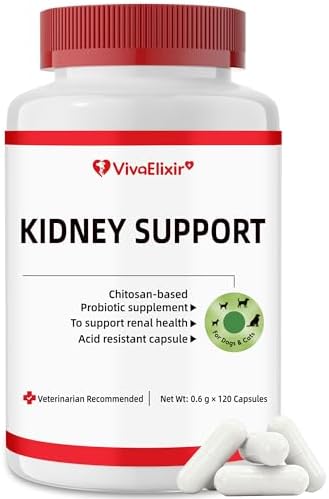
Best for: Pets needing holistic, multi-faceted renal support.
This supplement goes beyond just probiotics by including omega-3 fatty acids and N-Acetylcysteine (NAC). These ingredients work to protect kidney cells from oxidative stress while the triple probiotic blend supports the gut-kidney axis.
The formula is vet-formulated and produced in a GMP-compliant facility in the USA. It’s specifically designed for pets with ongoing kidney challenges. Because it contains additional active ingredients like NAC, you should ensure it doesn’t conflict with any existing treatments your pet is receiving.
Pros
- Includes omega-3s and NAC for protection.
- Vet-formulated for renal support.
- Triple probiotic blend for gut balance.
Cons
- Contains multiple active ingredients beyond probiotics.
Best Probiotics for Kidney Disease
Understanding CFU Counts
The number of Colony-Forming Units (CFUs) indicates the number of live, active bacteria in a supplement. When choosing a product, a higher CFU count often suggests a more potent formula, but it isn’t the only factor. For kidney support, you want a product that delivers enough organisms to effectively metabolize nitrogenous waste in the gut. Always look for the CFU count on the label to ensure you’re getting a therapeutic dose. Avoid products that don’t disclose this number, as you can’t verify the strength of the formula.
Probiotic Strains and Synergy
Different probiotic strains have different strengths. Some are better at consuming urea, while others focus on general gut health. Look for multi-strain formulas that include beneficial bacteria like Lactobacillus and Bifidobacterium. Many of the best supplements are “synbiotic,” meaning they pair probiotics with prebiotics (like inulin). This helps the good bacteria thrive once they reach your system.
Storage and Stability
Some probiotics are very sensitive to temperature and require refrigeration to keep the bacteria alive. Others are “shelf-stable,” using advanced coating technology to keep the contents safe at room temperature. If you travel frequently or struggle to remember to keep items in the fridge, a shelf-stable capsule is a better choice. Refrigerated options are often very potent but require a strict commitment to storage. Ensure you read the label carefully before buying to see if your home setup can support the product’s needs.
Delivery Methods
The way a supplement is delivered matters for its success. Acid-resistant capsules are essential for these products, as they prevent stomach acid from destroying the bacteria before they reach the intestines. If you’re buying for a pet, look for capsules that can be pulled apart or opened, allowing you to mix the powder into wet food. This makes administration much easier if your pet is a picky eater or struggles with pills. For humans, standard swallowable capsules are usually sufficient, provided they’re designed for delayed release.
Mistakes to Avoid with Kidney Probiotics
Ignoring Medical Advice
The biggest mistake is starting a new supplement regimen without talking to a doctor or veterinarian. Probiotics are powerful, and they can interact with other medications or specific renal diets. A professional can help you determine if a supplement is actually necessary and which ingredients might be safer for your specific condition. Never assume that because a product is natural, it’s automatically safe to add to your current medical routine. Always check for potential conflicts with your current treatment plan first.
Choosing Based Only on Brand Popularity
Always compare the actual specs of the product rather than relying on marketing claims.
Expecting Instant Results
Misunderstanding Storage Needs
Failing to follow storage instructions is a common error that renders a product useless. If a label says “keep refrigerated,” leaving it on the counter will kill the live bacteria inside. Conversely, if you buy a shelf-stable product, ensure you keep it in a cool, dry place away from direct sunlight. Improper storage is the most common reason why a high-quality supplement fails to provide the expected benefits. Read the back of the bottle as soon as it arrives and follow the storage rules exactly.
FAQ
Can I give my pet a human probiotic for kidney support?
It’s safer to use a product specifically formulated for pets. Human supplements may contain ingredients or dosages that aren’t appropriate for the metabolism of cats or dogs. Always stick to pet-specific brands for your animals.
Do these supplements replace my current kidney medication?
No, these products are intended to support, not replace, prescribed medications. They should be used as part of a comprehensive care plan overseen by your doctor or veterinarian.
Why do some capsules need to be acid-resistant?
Stomach acid is very harsh and can kill the beneficial bacteria in a probiotic before they reach the gut. Acid-resistant capsules protect the probiotics so they can arrive at the target area alive and active.
How long does a bottle usually last?
It depends on the dosage instructions and the number of capsules in the bottle. Most of the products reviewed here provide a one-month supply based on the recommended daily intake.
Conclusion
The best probiotic for kidney health is one that provides a high CFU count, uses acid-resistant technology, and fits your storage capabilities. Always consult with your medical provider to ensure the chosen supplement aligns with your specific renal health plan.
Related guides